

Your Shopping Cart


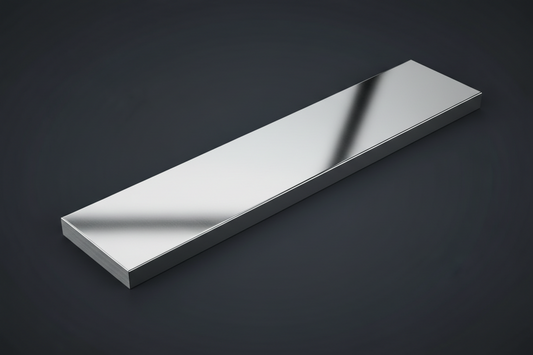

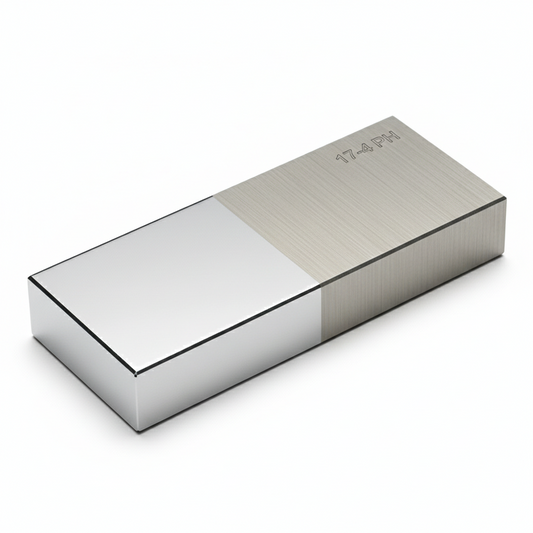

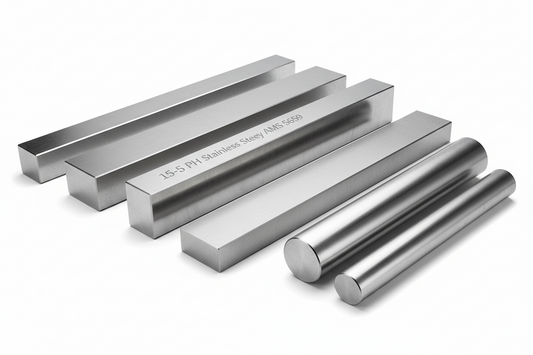




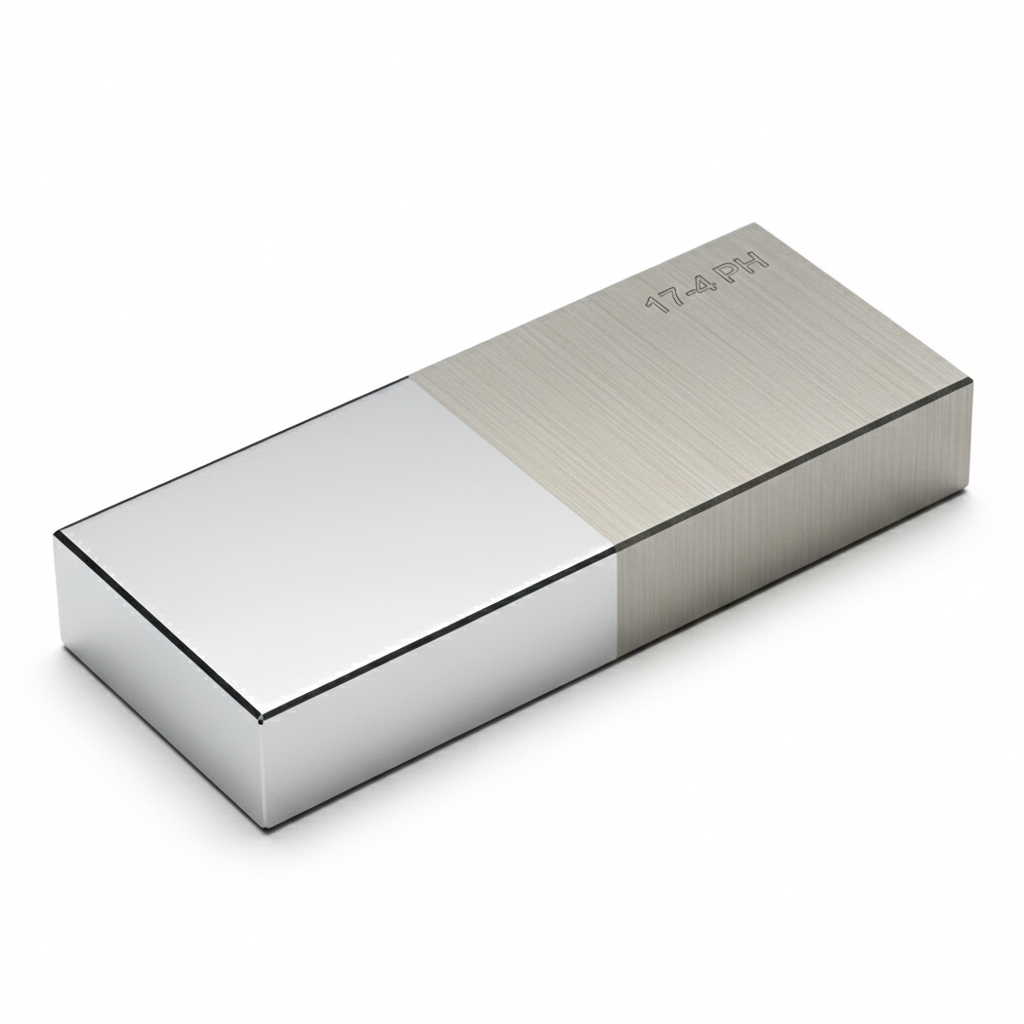
17-4 PH Stainless Steel (also known as UNS S17400 or Type 630 stainless steel) is a precipitation-hardening martensitic stainless steel that combines high strength, good corrosion resistance, and excellent mechanical properties. It is one of the most widely used high-strength stainless steels in aerospace, defense, oil & gas, chemical processing, and industrial applications.
Key Characteristics
- High Strength: Can achieve very high tensile and yield strengths through heat treatment.
- Corrosion Resistance: Comparable to 304 stainless steel in many environments and better than most standard martensitic grades.
- Heat Treatable: Mechanical properties can be tailored through aging treatments (e.g., H900, H1025, H1150 conditions).
- Good Toughness: Maintains useful toughness and ductility while providing high strength.
- Good Fabricability: Can be machined and welded in the solution-annealed condition before final aging.
Typical Chemical Composition
- Chromium (Cr): 15–17.5%
- Nickel (Ni): 3–5%
- Copper (Cu): 3–5%
- Niobium/Columbium (Nb/Cb): 0.15–0.45%
- Carbon (C): Max 0.07%
- Iron (Fe): Balance
Common Heat Treatment Conditions
| Condition | Typical Feature |
|---|---|
| H900 | Maximum strength and hardness |
| H1025 | Good balance of strength and toughness |
| H1075 | Improved toughness |
| H1150 | Highest toughness and stress-corrosion resistance |
Typical Applications
- Aerospace structural components
- Aircraft fittings and landing gear parts
- Defense and military hardware
- Pump and valve components
- Oil & gas equipment
- Nuclear industry components
- Fasteners, shafts, and gears
- Food processing equipment
Advantages
✓ High strength-to-weight ratio
✓ Good corrosion resistance
✓ Excellent fatigue resistance
✓ Heat treatable to multiple strength levels
✓ Readily available in bar, plate, sheet, forging, and billet forms
Limitations
- Corrosion resistance is generally lower than 316 stainless steel in highly aggressive chloride environments.
- Toughness decreases in the highest-strength conditions (such as H900).
- Not recommended for prolonged service above approximately 315°C (600°F).
Typical Mechanical Properties (H900 Condition)
- Tensile Strength: ~1,310 MPa (190 ksi)
- Yield Strength: ~1,170 MPa (170 ksi)
- Hardness: ~40–44 HRC
- Elongation: ~10%
For aerospace and defense procurement, 17-4 PH is often selected when a component requires significantly higher strength than 304 or 316 stainless steel while still maintaining good corrosion resistance and relatively straightforward manufacturing.
17-4 PH Stainless Steel (also known as UNS S17400 or Type 630 stainless steel) is a precipitation-hardening martensitic stainless steel that combines high strength, good corrosion resistance, and excellent mechanical properties. It is one of the most widely used high-strength stainless steels in aerospace, defense, oil & gas, chemical processing, and industrial applications.
Key Characteristics
- High Strength: Can achieve very high tensile and yield strengths through heat treatment.
- Corrosion Resistance: Comparable to 304 stainless steel in many environments and better than most standard martensitic grades.
- Heat Treatable: Mechanical properties can be tailored through aging treatments (e.g., H900, H1025, H1150 conditions).
- Good Toughness: Maintains useful toughness and ductility while providing high strength.
- Good Fabricability: Can be machined and welded in the solution-annealed condition before final aging.
Typical Chemical Composition
- Chromium (Cr): 15–17.5%
- Nickel (Ni): 3–5%
- Copper (Cu): 3–5%
- Niobium/Columbium (Nb/Cb): 0.15–0.45%
- Carbon (C): Max 0.07%
- Iron (Fe): Balance
Common Heat Treatment Conditions
| Condition | Typical Feature |
|---|---|
| H900 | Maximum strength and hardness |
| H1025 | Good balance of strength and toughness |
| H1075 | Improved toughness |
| H1150 | Highest toughness and stress-corrosion resistance |
Typical Applications
- Aerospace structural components
- Aircraft fittings and landing gear parts
- Defense and military hardware
- Pump and valve components
- Oil & gas equipment
- Nuclear industry components
- Fasteners, shafts, and gears
- Food processing equipment
Advantages
✓ High strength-to-weight ratio
✓ Good corrosion resistance
✓ Excellent fatigue resistance
✓ Heat treatable to multiple strength levels
✓ Readily available in bar, plate, sheet, forging, and billet forms
Limitations
- Corrosion resistance is generally lower than 316 stainless steel in highly aggressive chloride environments.
- Toughness decreases in the highest-strength conditions (such as H900).
- Not recommended for prolonged service above approximately 315°C (600°F).
Typical Mechanical Properties (H900 Condition)
- Tensile Strength: ~1,310 MPa (190 ksi)
- Yield Strength: ~1,170 MPa (170 ksi)
- Hardness: ~40–44 HRC
- Elongation: ~10%
For aerospace and defense procurement, 17-4 PH is often selected when a component requires significantly higher strength than 304 or 316 stainless steel while still maintaining good corrosion resistance and relatively straightforward manufacturing.
No certifications available.